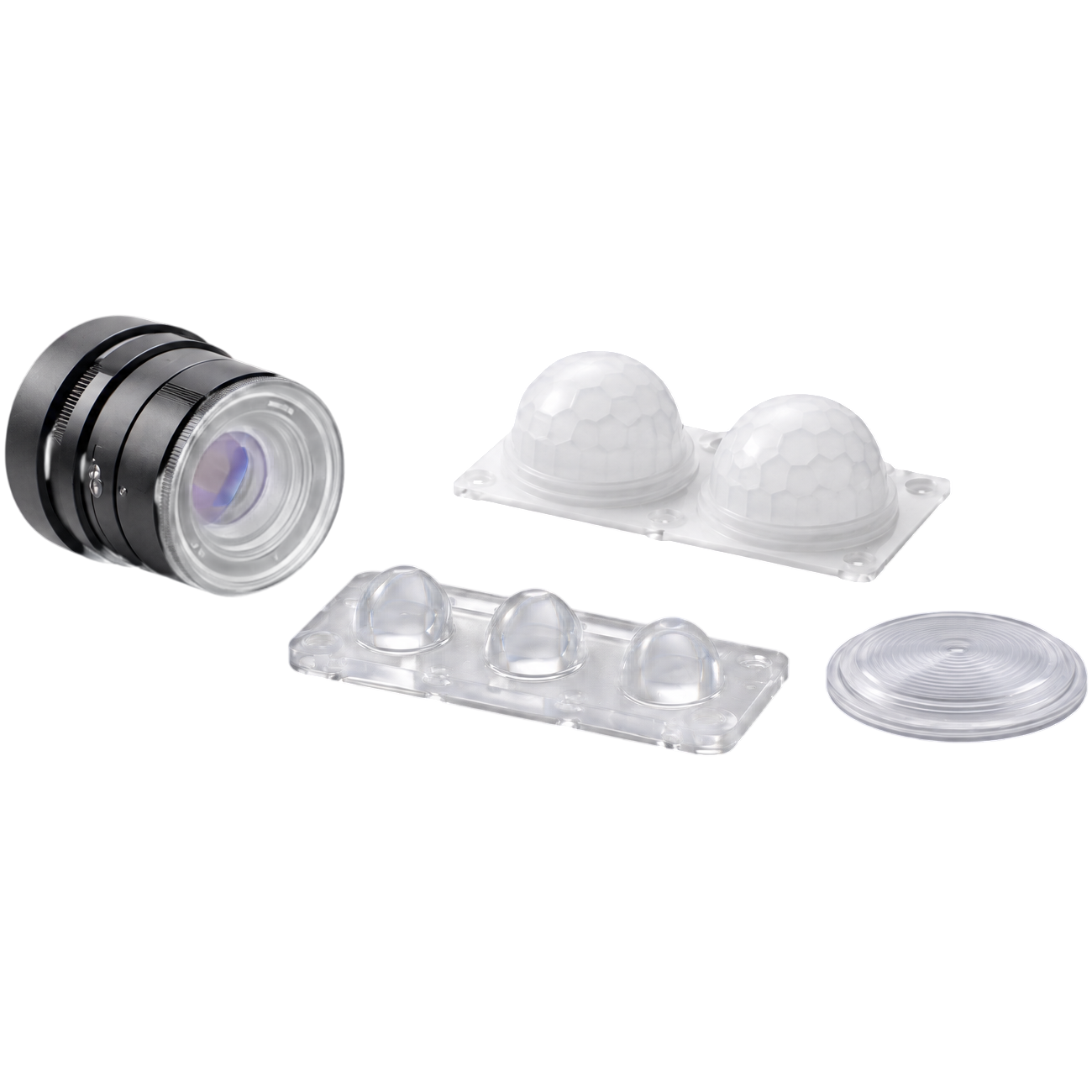
Outdoor security cameras integrate PIR (Passive Infrared) sensors, camera lenses, secondary optical components, and light sensors to provide high-performance smart surveillance capabilities.
PIR sensors accurately detect human movement, helping reduce false triggers that may occur with camera-based software algorithms. Light sensors automatically switch between day and night modes according to ambient light conditions. Camera lenses and secondary optical components optimize image quality and illumination patterns, enhancing nighttime visibility and image recognition performance.
By integrating these components, outdoor security cameras can improve overall surveillance reliability and adaptability to different environmental conditions. They are widely used in residential areas, commercial buildings, factories, parking lots, public spaces, and other outdoor smart security applications.
