China Accelerates Solid-State Transformer Development as AI and New Energy Drive Industry Growth
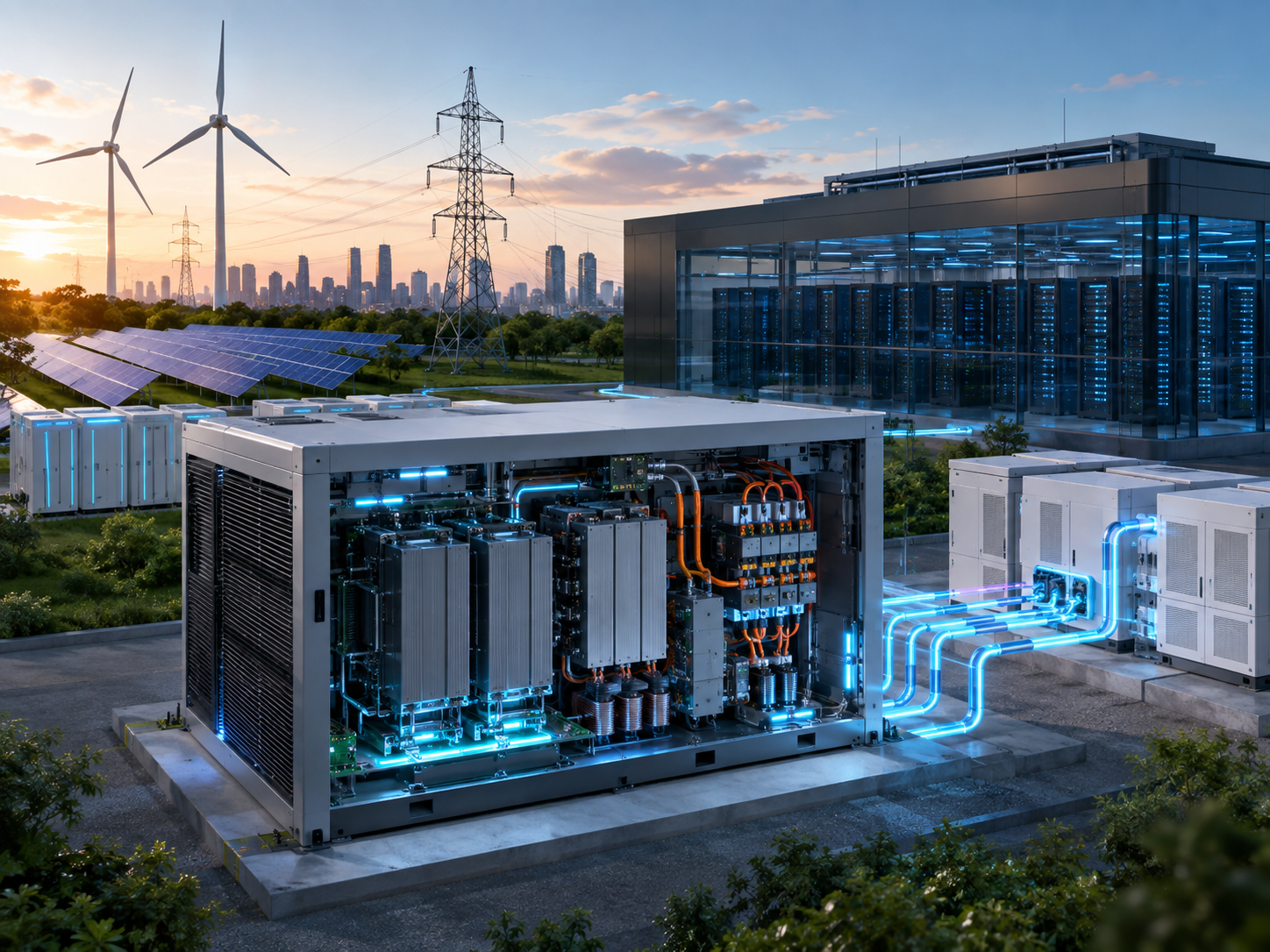
As AI computing, renewable energy, and smart grid technologies continue to advance, the demand for higher efficiency, greater power density, and more flexible energy conversion is increasing. Solid-State Transformers (SSTs) are therefore gaining attention as an important area of development within the power electronics industry. Recently, China's market has shown growing momentum in SST technology development, demonstration projects, and supply chain investment, with an increasing number of companies entering the field. This trend indicates that solid-state transformers are gradually progressing from technology validation toward practical applications.
Unlike conventional power conversion systems centered on line-frequency transformers, SSTs combine power semiconductors, high-frequency magnetic components, and digital control technologies to enable more flexible voltage and power conversion. They also offer advantages such as bidirectional power flow, reduced system size, high power density, and improved energy conversion efficiency. As wide-bandgap semiconductor technologies, particularly silicon carbide (SiC), continue to mature, the potential of SSTs for high-voltage, high-frequency, and high-efficiency power conversion applications is attracting increasing industry attention.
The rapid expansion of AI data centers is also creating new requirements for next-generation power architectures. As the power consumption of GPUs, AI servers, and high-density computing equipment continues to rise, data centers must not only deliver greater power capacity but also reduce energy losses and thermal loads throughout the power conversion process. By enabling a more streamlined and efficient power conversion architecture, SSTs may become a potential technology option for future high-density computing facilities and intelligent data center power distribution systems.
At the same time, the continued growth of solar energy, energy storage systems, and electric vehicle charging infrastructure is opening up additional opportunities for SST applications. As renewable energy and energy storage systems involve significant levels of DC power conversion and management, SSTs may play a role in DC microgrids, renewable energy integration, smart power distribution, megawatt-level fast charging, rail transportation, and high-power industrial equipment, helping improve system flexibility and energy efficiency.
At present, the overall SST market remains in the early stages of industrialization. Further development is still needed in areas such as technology maturity, system reliability, cost optimization, and standardized design. China's growing investment in technology development and demonstration projects reflects an important stage in the industry's transition toward application validation and commercialization. From a broader global perspective, the continued expansion of AI computing infrastructure, renewable energy systems, and next-generation power architectures is expected to support the long-term development of SST technologies.
From a supply chain perspective, the development of solid-state transformers is also expected to drive demand for silicon carbide power devices, high-frequency magnetic components, capacitors, thermal management materials, and related control technologies. As demonstration projects increase, technologies continue to mature, and supply chains become more established, solid-state transformers are expected to play an increasingly important role in next-generation power conversion and smart energy systems, creating new opportunities for the power electronics and electronic components industries.
**Information Reference: [IFENG NEWS] https://ishare.ifeng.com/c/s/v006iz9-_urRrEmz1q79POxOAOB9CLCSXlv9bbtV89Ump-_CPJ7fQSDvtilhRx--pjB0tkv?spss=np&recallChannel=searchResult&channelId=&aman=fgY043sr3rkfgZIQ04nODUHzODRM0NaTZhXMTFPjZDeEx1Z00v&gud=2L259C7797179s800i000T004
**Note: This content has been compiled and adapted. For the full original text, please visit the link above.