PCB Industry Outlook: High-End Material Supply Gaps, Technology Differentiation, and Key Production Milestones for 2026–2028
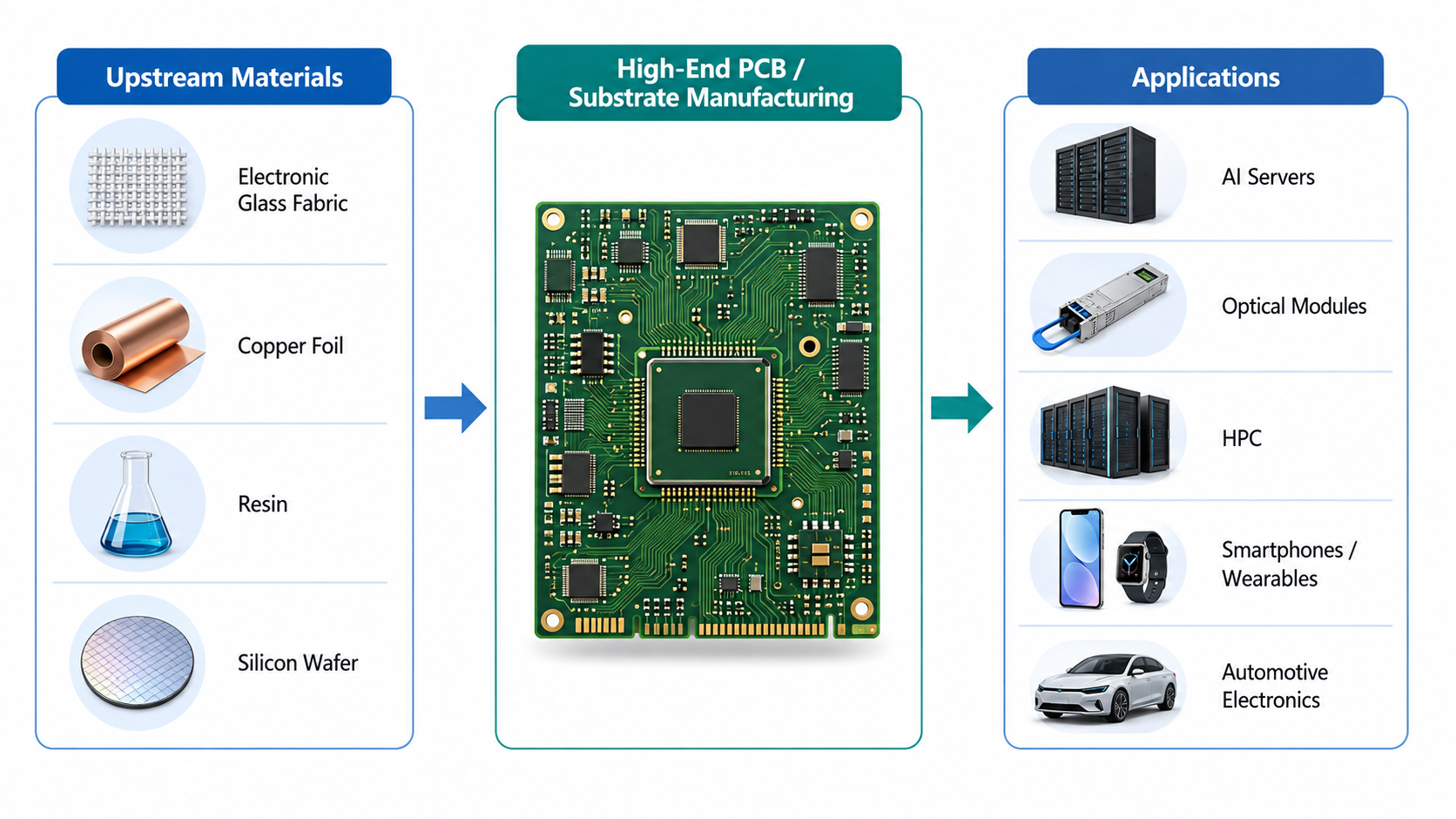
Driven by the rapid growth of AI applications and high-end electronics, the PCB industry is undergoing significant technological differentiation and structural transformation. The surging demand for 1.6T optical modules, MCP packaging, and high-end AI substrates is creating severe supply shortages for critical materials, including second-generation LD-type high-end electronic fabrics and high-end copper-clad laminates (CCL). In particular, second-generation LD-type electronic fabric is facing extremely tight supply due to long lead times for key production equipment and limited capacity. With inventories approaching zero, the supply-demand imbalance is expected to persist through the second half of 2027. As the traditional peak season approaches, continued supply constraints could further drive prices higher than market expectations.
In contrast, conventional PCB products and small- to mid-sized PCB manufacturers continue to face operating pressure. Weak consumer electronics demand, combined with rising raw material costs and compressed profit margins, is making it increasingly difficult for manufacturers focused on lower-end applications to maintain profitability.
Alongside these market changes, domestic key suppliers have successfully entered the supply chains of leading global consumer electronics companies, further accelerating the shift toward localized supply and manufacturing capabilities. Looking ahead, several key production milestones are expected to shape the PCB industry over the next three years. The second half of 2026 is expected to mark the beginning of large-scale production and revenue realization for 1.6T optical modules and MCP packaging technologies. In the second half of 2027, domestically produced equipment is expected to support the introduction and large-scale production of conventional substrates. By 2028, high-end PI substrates are expected to enter mass production in the second half of the year, while glass substrates are anticipated to gradually achieve volume production beginning in the second quarter, following breakthroughs in key technical challenges.
Overall, tight supplies of high-end materials, capacity constraints, and continued technological advancements are expected to remain key growth drivers for the PCB industry over the next three years. As AI infrastructure, high-speed optical communications, and advanced packaging continue to expand, the industry is expected to undergo further differentiation, with high-end materials and advanced substrate technologies becoming increasingly important to the future growth of the PCB supply chain.
**Information Reference【xueqiu.com】https://xueqiu.com/8540773367/400183620
**Note: This content has been compiled and adapted. For the full original text, please visit the link above.