Growing Demand for Foldable Smartphones Drives Opportunities for Flexible Printed Circuit Market
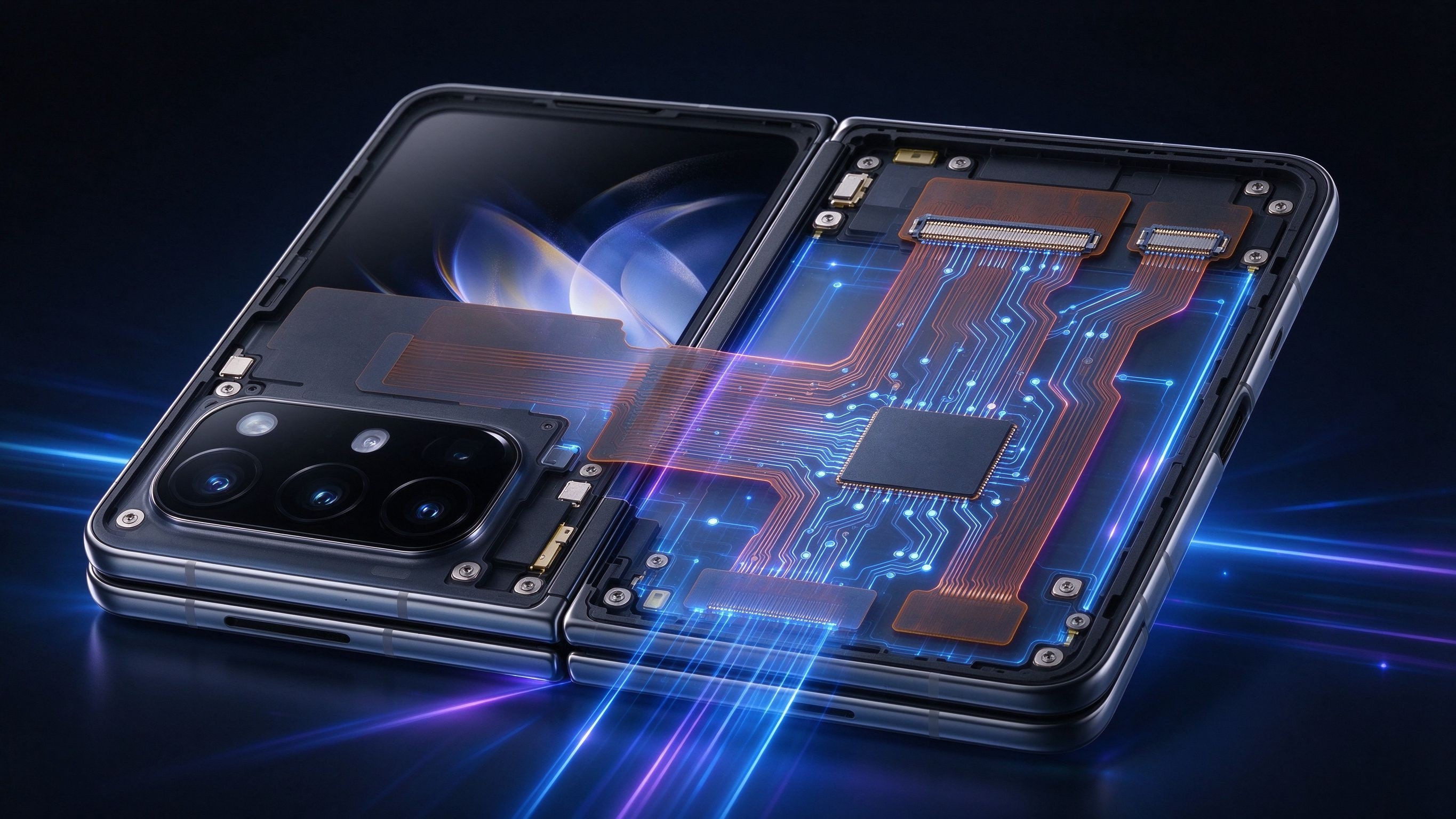
As major smartphone brands such as Huawei, Apple, and Xiaomi continue to introduce new foldable devices, flexible printed circuit boards (FPCs) are gaining increasing attention across the foldable device supply chain. Compared with conventional smartphones, foldable devices feature more complex internal structures and connection requirements, creating higher demands for FPCs in terms of usage volume, circuit density, and material specifications.
With advantages such as flexibility, lightweight construction, and space-saving design, FPCs can maintain signal transmission under repeated bending and are widely used in smartphone display, touch, camera, and other module connections. As the structural design of foldable devices becomes increasingly sophisticated, both the number of FPCs used per device and their overall value differ significantly from those of conventional smartphones.
- Foldable Designs Drive Higher FPC Usage
Conventional smartphones typically use approximately 10 to 15 flexible printed circuit boards, while foldable smartphones may require more than 50 FPCs per device due to their more complex architectures, including hinge structures, dual mainboards, and dual batteries.
In addition to higher usage volume, foldable devices also place greater demands on FPC manufacturing processes and materials. Since the products must withstand repeated opening and closing of the device, FPCs need to provide reliable flexibility while also meeting requirements for fine-line circuitry, reliability, and efficient use of internal space.
According to industry analysis cited in the source report, the value of FPCs used in foldable smartphones is approximately three to six times that of FPCs used in conventional smartphones. As major smartphone brands continue to invest in foldable products, competition in the market is increasingly extending beyond cost control to areas such as advanced specifications, manufacturing capabilities, and product reliability.
-Supply Chain Players Expand Capacity and Technology Development
The development of the foldable smartphone market has also encouraged companies across the FPC supply chain to strengthen their capacity expansion and technology development efforts.
In the FPC manufacturing sector, Zhen Ding Tech Group continues to develop flexible printed circuit board products and participate in the development of new products and technologies for customers. Its Smart Manufacturing Base at the company's Shenzhen Third Park officially began construction in July 2026. The project includes FPC-related manufacturing facilities, with planned applications covering foldable devices, AI smartphones, AI glasses, wearable devices, and other emerging smart hardware.
According to publicly available company information, the FPC smart manufacturing base at the Shenzhen Third Park and other related projects will be developed in phases, with the pace of capacity expansion adjusted according to market demand.
Upstream equipment manufacturers are also expanding their capabilities in response to the growing demand for flexible and high-precision manufacturing. Zhuxiang Intelligent focuses on intelligent manufacturing equipment for flexible printed circuit boards and was listed on the Beijing Stock Exchange in May 2026. Its fundraising plans include the construction of an intelligent manufacturing base. The project involves the establishment of a smart factory, additional production lines, and supporting equipment to enhance manufacturing capabilities for precision punching, mounting, assembly, and other processes.
-Growing Attention on High-End FPC Applications
The continued development of foldable smartphones is increasing the importance of flexible printed circuit boards within the smartphone supply chain. From higher FPC usage per device to more demanding requirements for materials, circuit density, and manufacturing processes, market demand is gradually expanding from volume growth toward higher product specifications and manufacturing capabilities.
For FPC suppliers in Taiwan and mainland China, the development of foldable devices is creating additional market opportunities. Companies with established precision manufacturing capabilities, mass-production experience, and accumulated technical expertise are continuing to strengthen their positions in the high-end FPC market through capacity expansion and technology development.
Overall, as emerging smart hardware—including foldable smartphones, AI smartphones, AI glasses, and wearable devices—continues to evolve, the applications and technical requirements of flexible printed circuit boards remain areas worth monitoring.
**Information Reference【Fenghu · PCB Information Network】http://www.smthao123.com
**Note: This content has been compiled and adapted. For the full original text, please visit the link above.