Hall Effect Sensing IC Market Trends: Electrification and Smart Automation Drive Continued Demand Growth
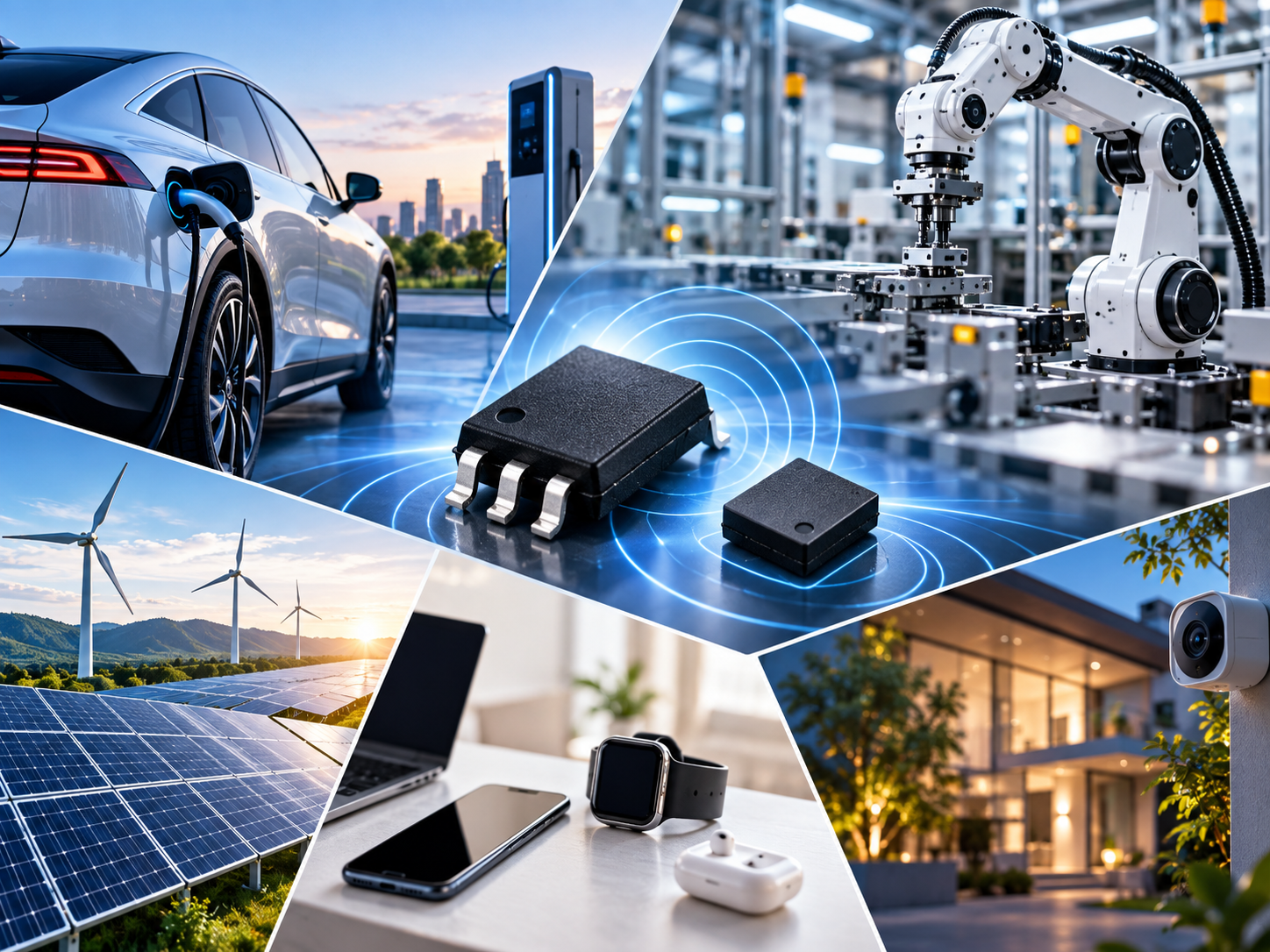
As electric vehicles (EVs), smart manufacturing, industrial automation, and consumer electronics continue to advance, the demand for real-time detection of position, speed, and current within electronic systems is steadily increasing. Hall Effect Sensing ICs offer key advantages such as non-contact sensing, high reliability, and easy integration. Their applications have expanded beyond traditional position and speed detection to include current sensing, motor control, battery management systems, and smart devices.
According to recent market research, the global Hall Effect Sensing IC market is expected to maintain steady growth over the coming years. Some studies estimate that the market will expand at a compound annual growth rate (CAGR) of approximately 6% from 2026 to 2033. Key growth drivers include automotive electrification, industrial automation, the expansion of IoT applications, and the continued miniaturization of electronic devices. While growth projections vary among research firms due to differences in market definitions and statistical coverage, the overall market outlook remains positive.
-Electric Vehicle Development Drives Demand for Magnetic Sensing
The increasing adoption of automotive electronics and electric vehicles is one of the key factors driving demand for Hall Effect sensing technology.
Within EV systems, motor control, battery management systems (BMS), inverters, and other power electronics require real-time monitoring of current, position, and speed. Hall Effect sensing technology detects changes in magnetic fields without physical contact, making it well suited for electronic systems that require electrical isolation, high reliability, and real-time feedback.
As electric and hybrid vehicles become more widely adopted, the number of sensing points within vehicle electrical systems continues to increase, creating additional opportunities for Hall IC applications in automotive electronics. Market research also identifies the growing adoption of EVs and increasing demand for battery management systems as important growth factors for the Hall Effect Current Sensor market.
-Industrial Automation and Robotics Expand Sensing Applications
Beyond the automotive sector, industrial automation and robotics are becoming important application areas for Hall Effect Sensing ICs.
Smart manufacturing equipment requires continuous monitoring of motors, actuators, and mechanical systems. Parameters such as position, speed, and current need to be measured and fed back to control systems in real time. Compared with contact-based sensing methods, Hall Effect sensors provide non-contact measurement, which can help reduce mechanical wear and improve long-term reliability. This makes them suitable for applications such as motor control, rotational position detection, and automated equipment.
As Industry 4.0, smart factories, and robotic applications continue to develop, demand for reliable and real-time sensing components is expected to increase further. Recent market research also identifies industrial automation and robotics as important growth drivers for the Hall Current Sensor market.
-Consumer Electronics and IoT Drive Demand for Miniaturized Sensors
In the consumer electronics and IoT sectors, electronic products are continuously evolving toward thinner, smaller, and more energy-efficient designs. This trend is driving Hall sensing ICs toward higher integration and lower power consumption.
Hall Effect Sensing ICs can be used for position detection, rotational sensing, button and switch status detection, and magnetic field sensing in a wide range of electronic devices. As smart wearables, smart home products, and other IoT devices become increasingly prevalent, compact, low-power, and easily integrated sensing components are expected to gain broader application opportunities.
As a result, market demand is not only reflected in the increasing volume of sensing IC adoption, but also in higher requirements for size, power consumption, sensitivity, and integration capabilities.
-Hall IC Technology Advances Toward Higher Sensitivity and Lower Power Consumption
Alongside growing market demand, Hall Effect Sensing IC technology continues to evolve.
Key product development trends include:
- Miniaturization: Meeting space constraints in consumer electronics, automotive electronics, and portable devices.
- Low Power Consumption: Supporting extended operating time in wearable devices, IoT products, and battery-powered equipment.
- High Sensitivity and Accuracy: Improving the precision of position, speed, and current detection.
- High-Temperature Performance and Reliability: Meeting the demanding operating conditions of automotive and industrial applications.
- Higher Integration: Integrating sensing, signal processing, and digital interfaces into a single IC to reduce system complexity.
Recent market research also indicates that low-power, high-sensitivity, and highly integrated CMOS Hall ICs are becoming important technology development directions, with applications in EV powertrain control and industrial equipment condition monitoring.
-Market Demand Expected to Expand in the Coming Years
Looking ahead, demand for Hall Effect Sensing ICs is expected to continue benefiting from three major trends: electrification, automation, and smart technologies.
In the automotive sector, the increasing adoption of electric vehicles and the growing level of electronic integration are expected to drive demand for current, position, and speed sensing. In the industrial sector, the expansion of smart manufacturing, robotics, and automated equipment will create more applications for motor and equipment monitoring. Meanwhile, in the consumer electronics and IoT markets, continued miniaturization and low-power design will further expand the application scope of Hall ICs.
Looking at the broader magnetic sensor market, market research estimates that the global magnetic sensor market will reach approximately USD 4.32 billion in 2026 and could grow to approximately USD 6.5 billion by 2033, representing a CAGR of around 6.0% during 2026–2033. Hall Effect sensors represent one of the major technology segments within this market.
The Hall Effect Current Sensor market is also expected to maintain a growth trajectory. The market is estimated at approximately USD 1.15 billion in 2026 and is projected to reach around USD 2.2 billion by 2033, representing a CAGR of approximately 4.7%. Key application areas include automotive, industrial automation, consumer electronics, renewable energy, and power-related applications.
Overall, the Hall Effect Sensing IC market is benefiting from the continued electrification, digitalization, and automation of the global electronics industry. From electric vehicles and energy management to industrial robotics, smart manufacturing, consumer electronics, and IoT, sensing components are playing an increasingly important role in modern electronic systems.
Beyond growth in overall adoption, future market development is expected to place greater emphasis on high accuracy, low power consumption, miniaturization, high reliability, and advanced integration. As industries continue to demand real-time sensing and intelligent control, Hall Effect Sensing ICs are expected to expand into a broader range of applications across next-generation electronic and power systems.
**Information Reference【Drive Happens Here】https://www.linkedin.com/pulse/providing-both-historical-trends-future-projections-hall-d4pqe
**Note: This content has been compiled and adapted. For the full original text, please visit the link above.