Flexible Circuit Board Industry Trends: Emerging Applications and Advanced Manufacturing Technologies
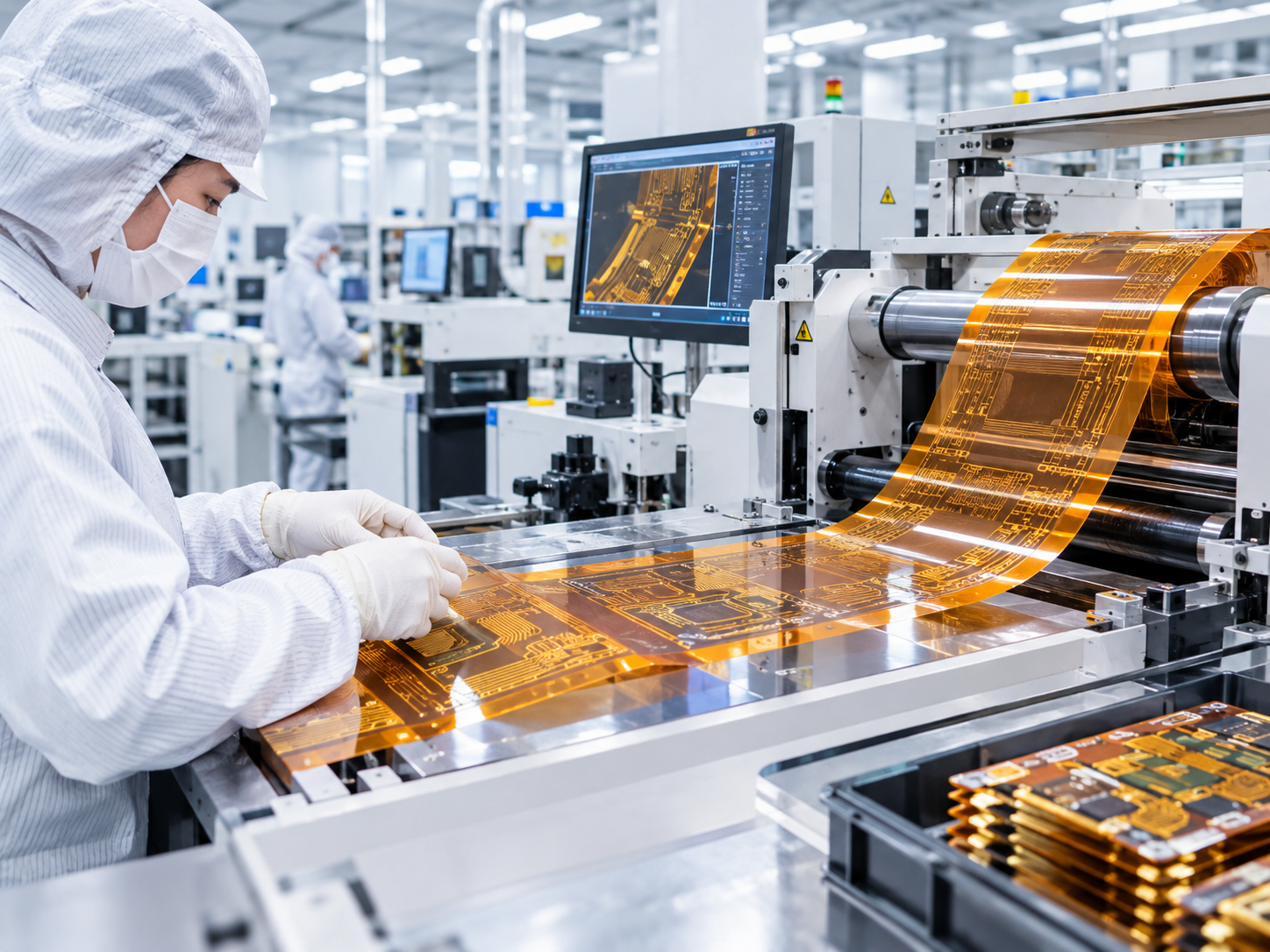
As electronic products continue to evolve toward thinner designs, higher performance, and greater integration, flexible printed circuit boards (FPCs) are becoming increasingly important in the electronics industry. Compared with traditional rigid printed circuit boards (PCBs), FPCs offer advantages such as lightweight construction, bendability, compact size, and high-density wiring. These characteristics make them widely used in smartphones, wearable devices, automotive electronics, medical equipment, and industrial electronics.
In recent years, demand for FPCs has expanded beyond traditional consumer electronics to emerging applications such as foldable devices, new energy vehicles (NEVs), and high-performance computing. This shift is driving the development of FPCs toward higher circuit density, greater reliability, and more customized designs. As electronic systems become increasingly complex, FPCs must not only accommodate wiring within limited spaces but also meet more demanding requirements for signal transmission, mechanical performance, and long-term stability.
In the consumer electronics sector, foldable smartphones and wearable devices continue to drive advances in flexible circuit technology. These products require thin and lightweight designs while maintaining reliable performance under repeated bending, placing greater demands on the flexibility, circuit density, thickness, and durability of FPCs. Meanwhile, the growth of NEVs and automotive electrification is increasing demand for electronic systems such as battery management systems, sensors, camera modules, in-vehicle displays, and smart cockpits. FPCs help accommodate space constraints inside vehicles, simplify wiring, and improve system integration. The automotive industry's stringent requirements for temperature resistance, vibration tolerance, and long-term reliability are also accelerating technological advancements.
The rapid development of artificial intelligence (AI) and high-performance computing (HPC) is creating additional demand for advanced electronic circuits. AI servers and data centers require increasingly sophisticated solutions for high-speed signal transmission, high-density interconnections, and power management. This has brought greater attention to advanced PCBs, high-density interconnect (HDI) boards, and rigid-flex boards, while encouraging further improvements in related materials and manufacturing processes. As different applications impose varying requirements for electrical performance, thermal management, space utilization, and reliability, circuit boards and associated materials are evolving toward more sophisticated and diversified designs.
Material technology is fundamental to FPC performance. Polyimide (PI) remains a widely used substrate material because of its excellent heat resistance and mechanical properties. As high-speed transmission and foldable devices continue to develop, low-dielectric-loss materials, liquid crystal polymer (LCP), and colorless polyimide (CPI) are also attracting increasing market attention. In addition, ultra-thin glass (UTG) has been adopted in certain foldable display applications. Material selection will increasingly require a comprehensive assessment of electrical and mechanical performance, processability, cost, product reliability, and supply chain stability.
On the manufacturing side, the continued miniaturization of electronic products is increasing the importance of fine-pitch circuitry, high-density interconnections, multilayer structures, and rigid-flex boards. Technologies such as laser processing, precision etching, and automated manufacturing equipment help improve circuit pattern accuracy, product consistency, and production efficiency, enabling manufacturers to meet the increasingly complex design requirements of advanced electronic products.
Smart manufacturing is also becoming an important driver of industry advancement. By integrating automated equipment, machine vision, process monitoring, and digital management systems, manufacturers can improve production efficiency, product yield, and quality traceability. These capabilities are particularly important as product specifications become more demanding and manufacturing processes require greater precision and consistency.
As market demand shifts toward higher-value products, competition in the FPC industry is expanding beyond cost and production capacity to include technological expertise, quality management, and service capabilities. Advanced products featuring high circuit density, high-frequency and high-speed performance, automotive-grade reliability, and specialized structures require not only precision manufacturing but also customized design, rapid prototyping, and reliability testing. Suppliers that can integrate material expertise, advanced manufacturing processes, quality control, and customer-specific solutions will be better positioned to compete in high-value market segments.
In addition to technological advancement, global supply chain adjustments and sustainable manufacturing are becoming increasingly important. In response to changes in international markets, companies are placing greater emphasis on supply chain resilience, the stable sourcing of critical materials, and diversified production and service networks across different regions. At the same time, environmental requirements are having a growing influence on electronics manufacturing. The adoption of lead-free and halogen-free materials, reductions in energy consumption, and improvements in material utilization will continue to shape FPC manufacturing processes and supply chain management.
Overall, the FPC industry is expanding beyond traditional consumer electronics into new energy vehicles, AI and data centers, medical equipment, and industrial electronics. Market priorities are also shifting from cost and production capacity toward higher circuit density, greater reliability, precision manufacturing, and customized solutions. As emerging electronic applications continue to develop, FPC technology is expected to advance toward thinner structures, finer circuitry, and higher levels of integration. For companies across the industry value chain, continued investment in materials and manufacturing technologies, stronger smart manufacturing capabilities, and a clear understanding of evolving application requirements will be essential to maintaining long-term competitiveness.